Finding 1
Verification, not discovery
Visitors often arrive from search or listing portals in an audit mindset. The experience puts concrete project facts ahead of promotional atmosphere.
A content-led property platform designed to help people discover projects, understand decisions, and enquire with confidence — while giving the PGR Infra team full control after launch.
Project
PGR
Client
PGR Infra
Industry
Real Estate
Product Type
B2C | Consumer
Platform
Responsive Web
My Role
Principal Product Designer | UX Engineer
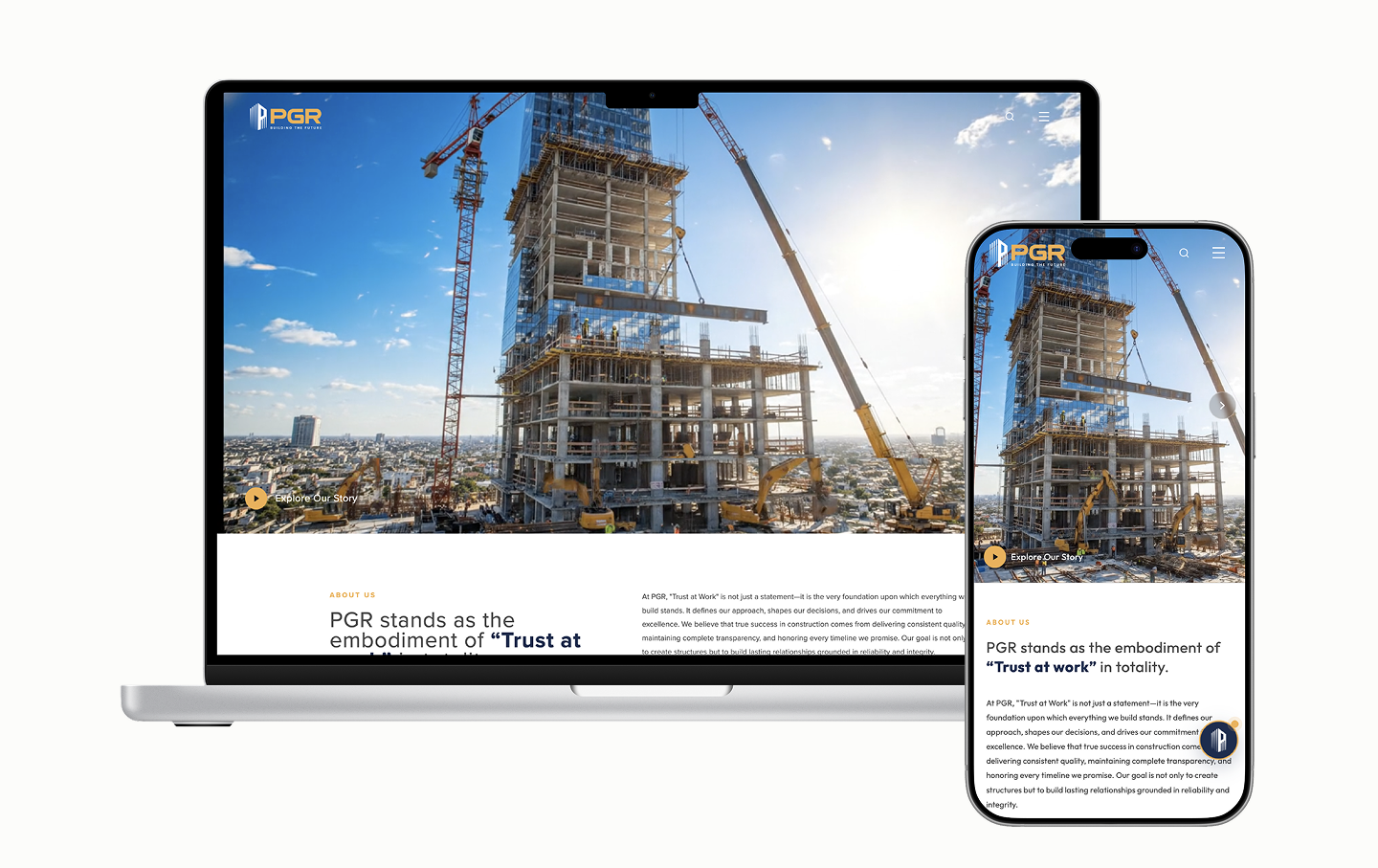
A client website became a scalable digital operating model. The engagement moved through three connected layers: a property discovery experience, a governed content backend, and a delivery workflow the PGR Infra team could keep using after launch.
Research showed that a developer website is not the beginning of a property search. It is the place people check whether the claims they have already seen elsewhere are credible enough to act on.
Four evidence passes
Indian homebuyer behaviour, RERA obligations, and market structure.
A heuristic review of supplied sites to separate useful patterns from inherited friction.
The project facts, plans, regulatory status, imagery, and careers content available to publish.
A small set of working principles translated into information architecture and page decisions.
Five constraints shaped the site
Visitors often arrive from search or listing portals in an audit mindset. The experience puts concrete project facts ahead of promotional atmosphere.
Published status and regulatory information belong in the project model and page anatomy - not as a legal footnote at the end.
Thumb-first paths, minimal-field enquiry, a persistent call route, and low-friction project exploration reduce the cost of acting on a phone.
Project pages stay self-sufficient and local in their reasoning, supporting different questions around reassurance, affordability, yield, and growth.
Clear page structure, metadata, and pre-rendered factual content help real buyers and answer engines reach the same reliable source.
Evidence, not validation. This was secondary research and competitive analysis; no buyer interviews, site-office observation, or usability testing were conducted before launch.
Published industry research, RERA guidance, market analysis, and discoverability references informed the desk-research rationale. External links open in a new tab.
The public experience uses a single visual and interaction language, so people can move from browsing to the details that make a property decision feel grounded.
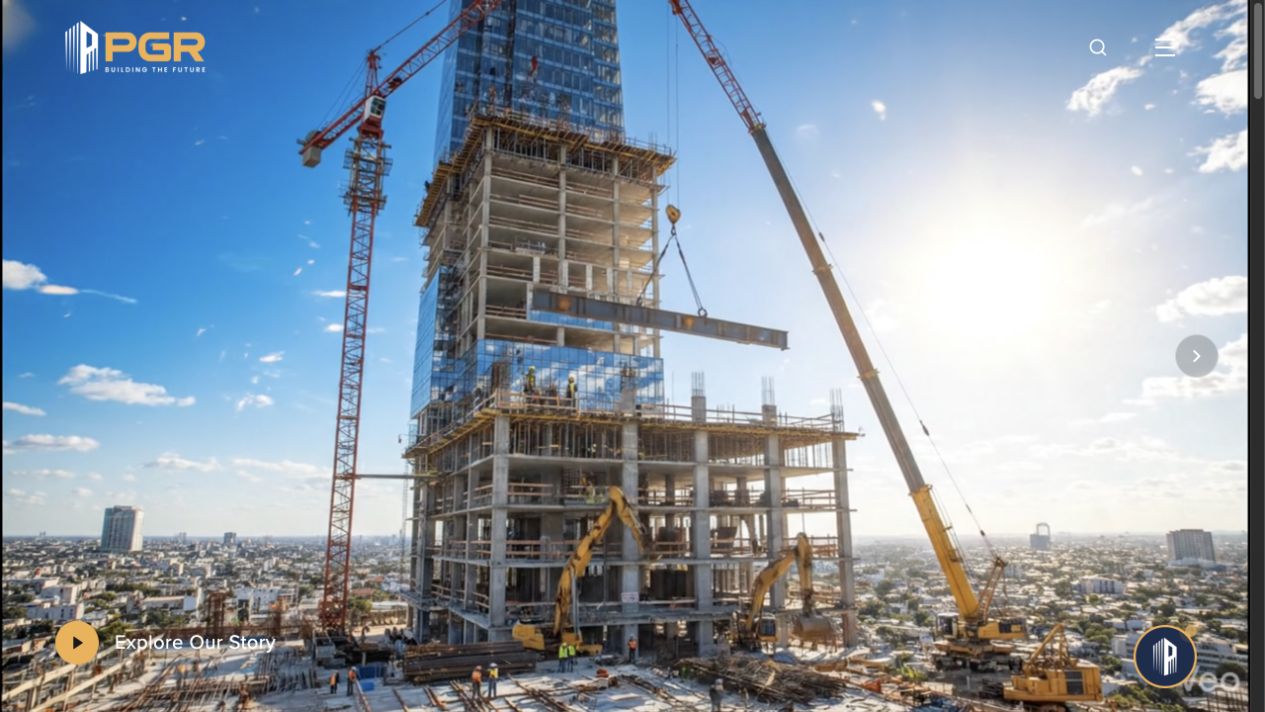
A clear entry point for projects, trust signals, editorial content, and direct enquiry.
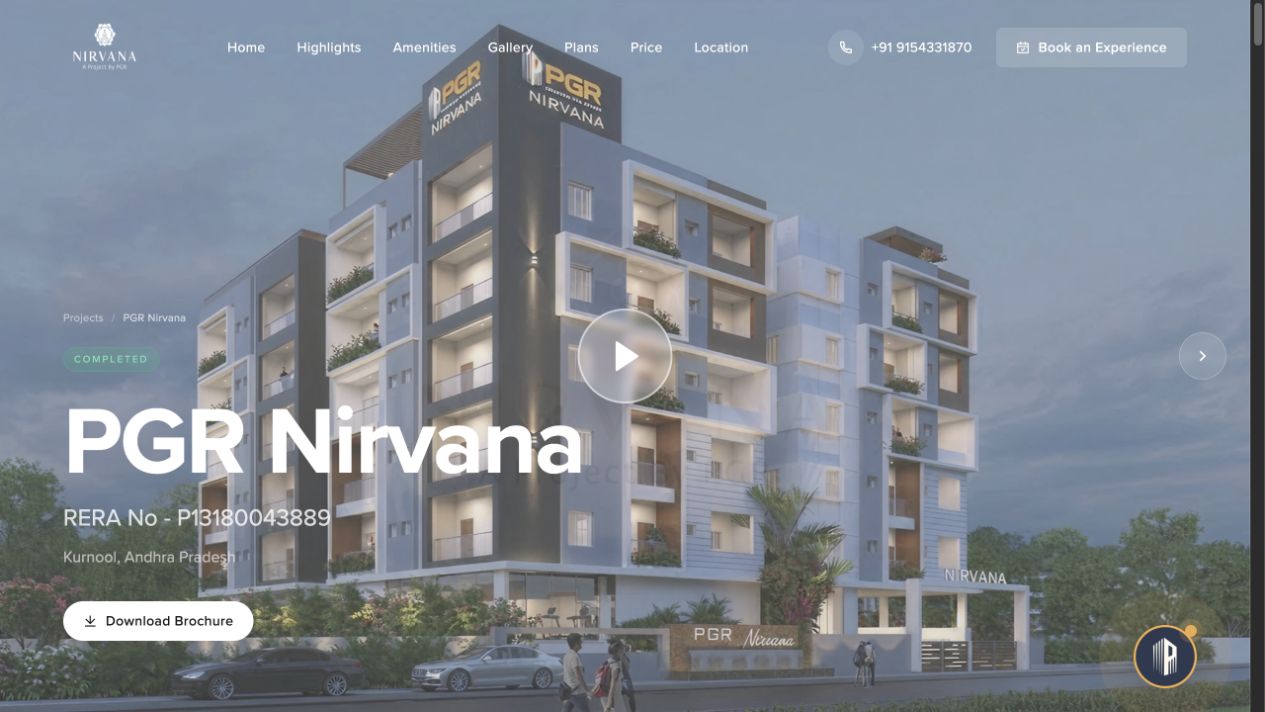
A repeatable detail pattern for project facts, amenities, plans, status, location, and enquiry.
Filterable project pathways turn location, category, status, and property type into useful starting points.
A reusable template keeps highlights, amenities, plans, pricing, and contact decisions in a predictable order.
RERA details, project status, downloads, and contact routes appear within the journey instead of a corporate footer.
The concept began as a Figma design system, then became a functional Readdy.ai prototype for discussing the experience with the client before production work began.
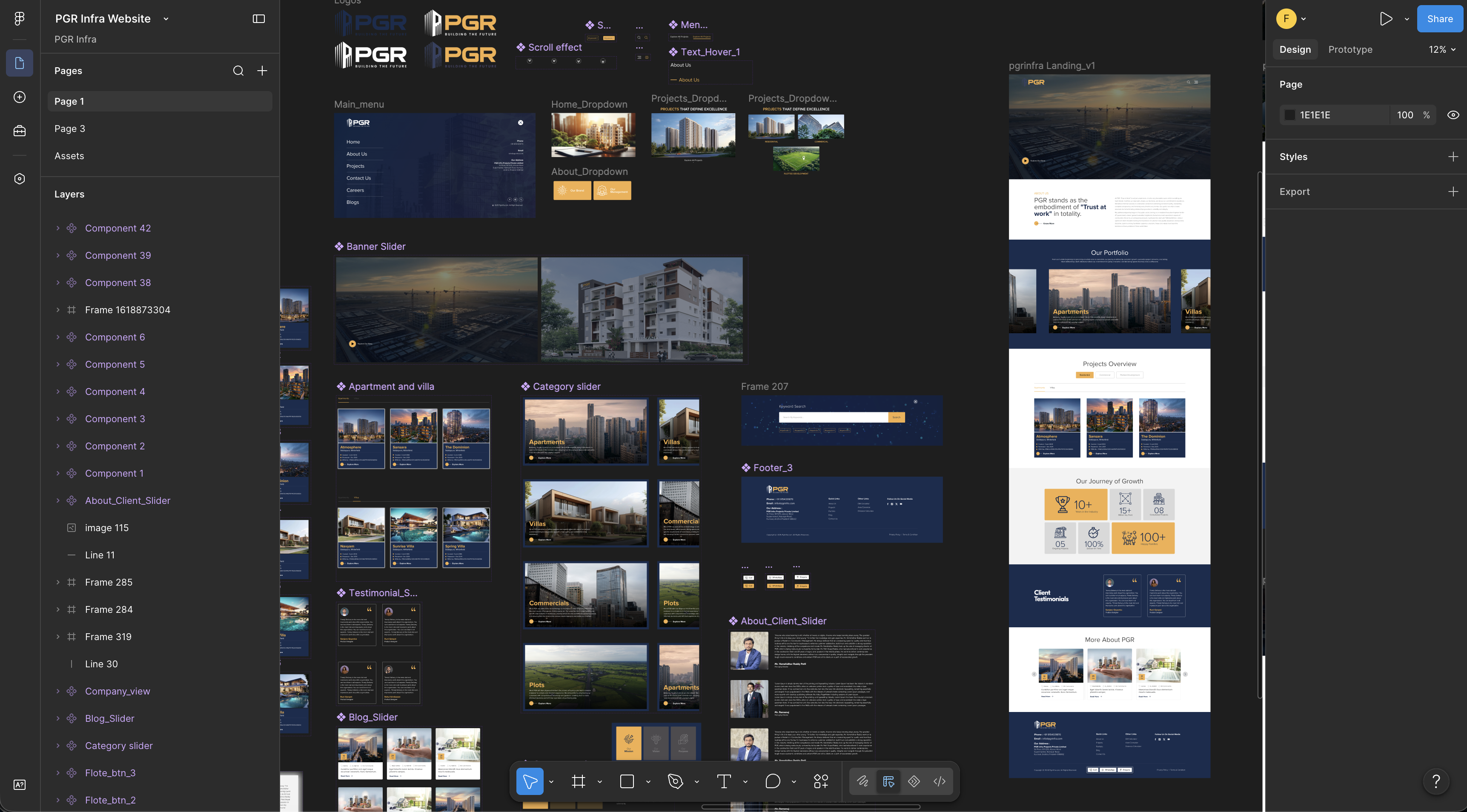
A shared visual system for navigation, project discovery, landing-page modules, and the detail journeys that needed to work as one product.
The design canvas established hierarchy, reusable modules, responsive behavior, and the content states needed for a property platform that earns trust.
The approved direction was translated into a working prototype, giving the client a real experience to discuss rather than a collection of static screens.
Key journeys existed as a usable artifact, reducing interpretation during client review.
Navigation, project discovery, and responsive states could be discussed in context.
Customization focused on the gaps that mattered rather than recreating the concept from zero.
Sanity Studio was tailored as PGR Infra’s content backend, so the team can publish projects, careers, blog posts, shared data, images, and video without changing application code.
Sanity Studio
Homepage
01 / 06
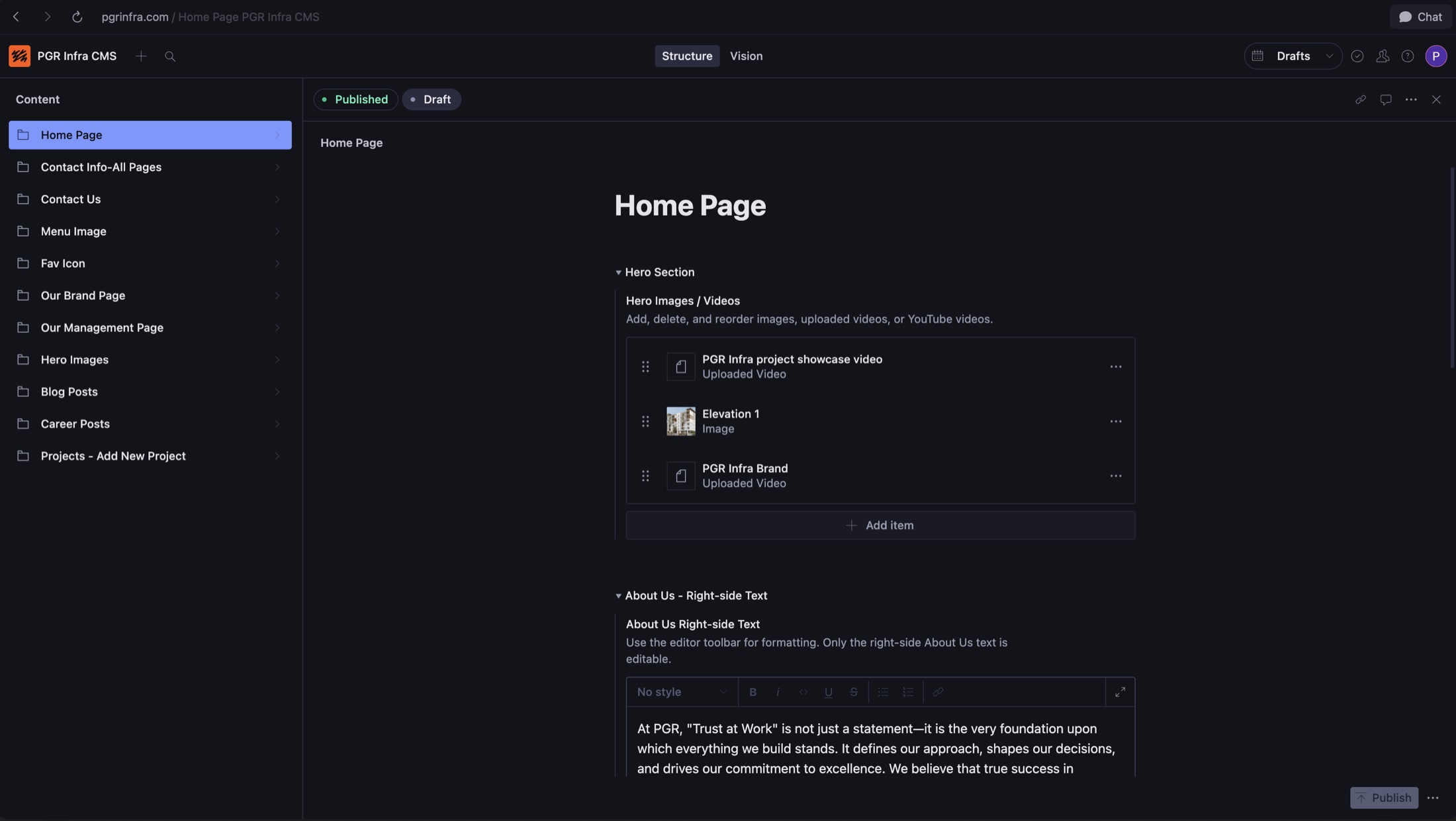
Shared homepage content, campaign modules, and editorial controls.
Codex translated approved design direction, content rules, and responsive requirements into working production code — while the product decisions remained grounded in the PGR Infra system.

Prompts captured the hierarchy, content model, behaviour, and responsive constraints — not just an isolated screen.
Codex accelerated React implementation, components, states, and the integration points required for a live, maintainable website.
The working output was checked against design intent, then connected to Sanity so the business could keep the experience current.
The website’s enquiry flow connects the customer-facing form to a server-side ZeptoMail service, so the PGR Infra team receives a structured email without exposing delivery credentials in the browser.
A visitor shares their contact details and project interest.
The submission is checked and prepared away from the public browser.
The service delivers a readable enquiry email to the team.
Codex created the form-to-email backend route from the approved interaction requirements, then documented the final deployment step so the service could run safely in production.

The email service is called from the server-side flow rather than from the visitor’s device.
The API key, sending details, and recipient email are added as environment variables in Hostinger’s deployment settings.
Once the environment variables are saved, the live form can deliver a complete, traceable enquiry to the team.
Credentials remain in Hostinger environment variables and are never published in the client-side codebase.
A retrieval-based assistant gives buyers a faster way to verify what PGR Infra has published — without inventing facts that the business cannot substantiate.
I used Codex to translate the approved content model, compliance boundaries, and enquiry flow into a custom retrieval assistant. Its job is deliberately narrow: surface the published record clearly, then hand the visitor to a person when the record ends.

Prompt contract
The brief defines the answerable corpus, the voice, factual boundaries, and the exact moment an enquiry should take over — before the interface is built.
Retrieval rule
The assistant reads current CMS-published project, editorial, and buyer content, so an approved content update is reflected in the response layer without duplicating it.
Safe fallback
When a request is unknown, unpublished, or too specific for the record, the assistant says so plainly and guides the visitor into the relevant enquiry path.
Voice inputs
Visitors can speak a request instead of typing it, making it easier to ask for project details, availability, or the right next step while on the move.
Codex supported the search and answer-engine implementation: making PGR Infra’s verified facts crawlable, measurable, and legible to Google and the AI systems buyers increasingly use to research a brand.
A buyer and an answer engine both need the same thing: a stable, authoritative record they can verify without filling gaps with assumptions. The implementation keeps one source of truth readable to both.
Crawlable facts
Server-rendered content, sitemaps, and structured data make the published record legible.
Verified identity
Company and project claims remain tied to the client’s approved records.
Google Search Console, Analytics, Bing Webmaster Tools, conversion tracking, crawl directives, and mobile performance measurement establish a search surface that can be observed and improved.
Server-rendered facts, schema.org data, a consistent entity definition, llms.txt guidance, and answer-first page content give ChatGPT, Claude, Gemini, and other systems a clear source to read.
The immediate standard is not an unverified ranking claim. It is ensuring the brand is identified and described from its published facts — with unknown details left unanswered rather than invented.
Evidence captured
Search, analytics, and answer-engine captures document how the published PGR Infra record is being surfaced and understood.
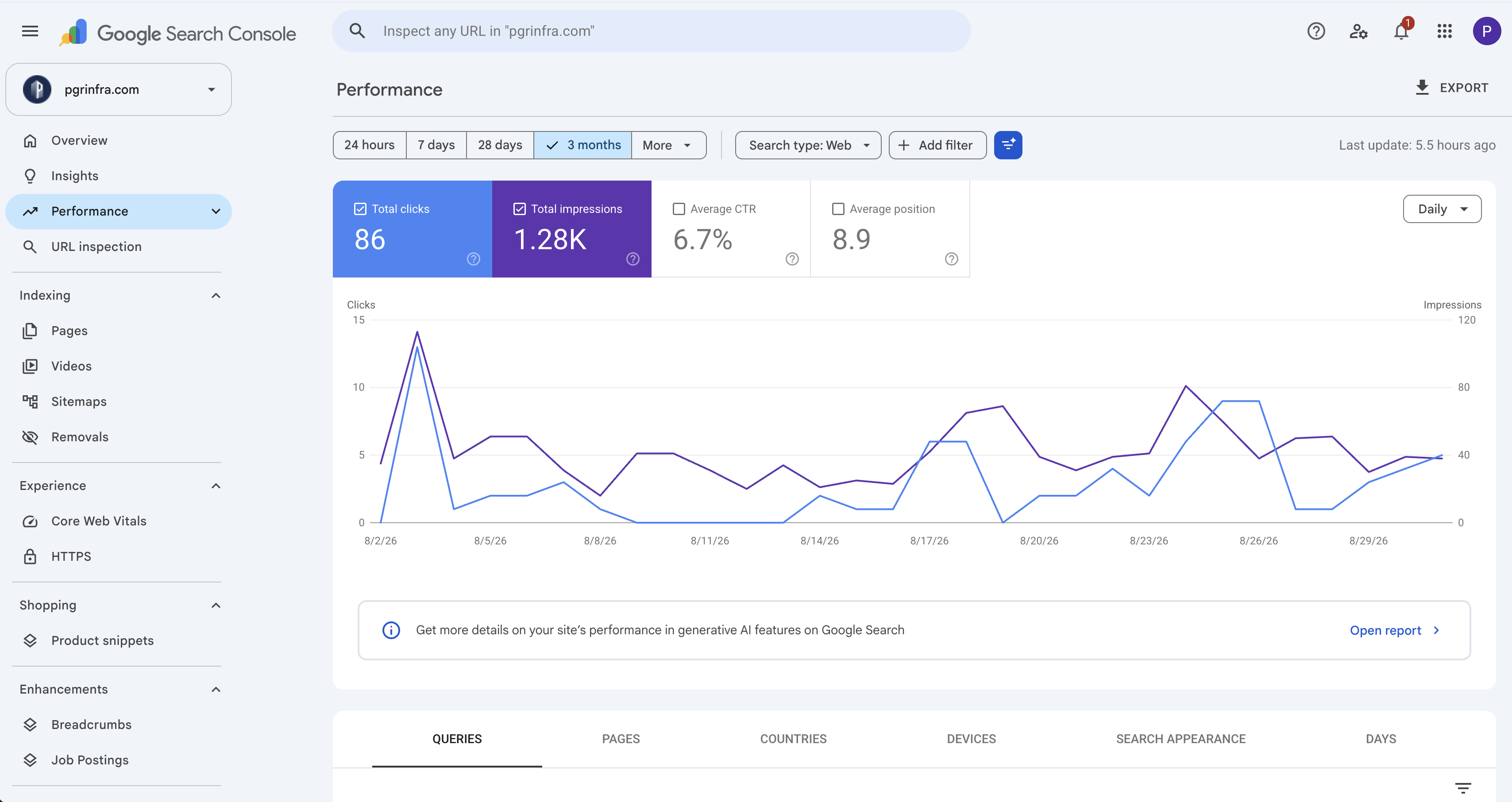
Google Search Console
Three-month performance: 86 clicks, 1.28K impressions, 6.7% CTR, and an average position of 8.9.
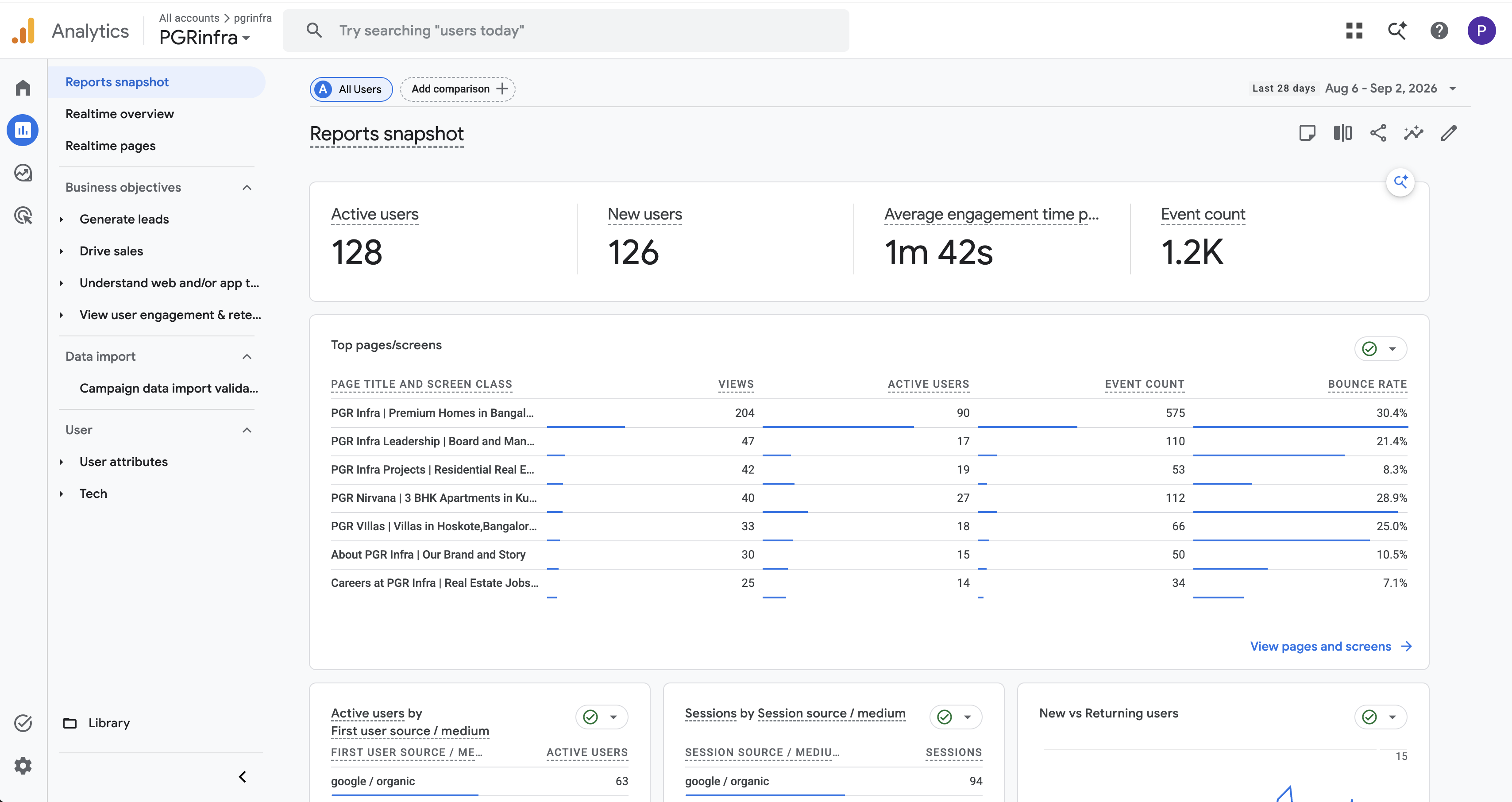
Google Analytics
28-day engagement snapshot: 128 active users, 126 new users, 1m 42s average engagement, and 1.2K events.
Answer-engine evidence
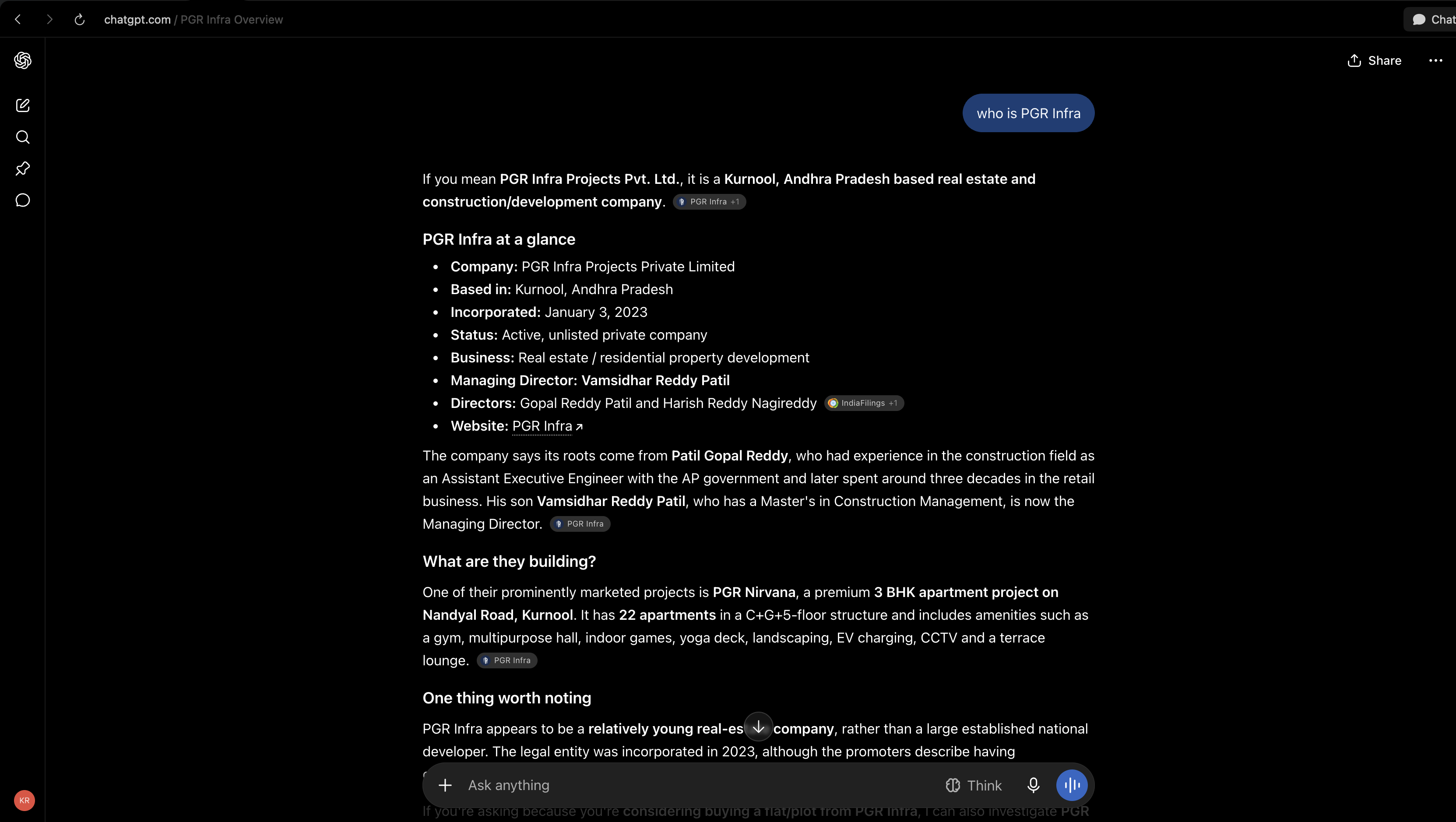
ChatGPT
Identifies PGR Infra Projects Pvt. Ltd. as the real-estate developer and surfaces PGR Infra sources.
A deliberate delivery path connected the original design work to a live, client-owned platform: Figma established the direction, Readdy.ai made it interactive early, GitHub tracked the source, Codex implemented the production system, and Vercel previews supported testing before the Hostinger release.
Figma → Readdy.ai
Approved interface intent became a functional prototype for reviewing journeys, content, and responsive behaviour together.
GitHub → Codex
The prototype became a versioned codebase, then a production implementation with Sanity CMS, the retrieval assistant, Zoho ZeptoMail, and AI visibility work.
Vercel → Hostinger
Preview deployments made the experience testable with the client; after approval, the verified code was released into the client’s Hostinger environment.
The delivery workflow kept design, implementation, testing, and hosting connected rather than treating launch as a final handoff. That made it possible to present a working product earlier, collect actionable feedback, and preserve a traceable path to the live site.
Vercel’s Hobby plan supplied a shareable environment for functional checks, client walkthroughs, and feedback before the release decision.
GitHub preserved the evolving source between Readdy.ai, Codex, and each deployment target, making changes attributable and reviewable.
After approval, the same tested implementation moved to Hostinger, where the client owns the live domain, environment settings, and ongoing release surface.
The CMS, assistant, secure email delivery, and AI visibility improvements were implemented as one connected production system — not separate demonstrations.
Deployment evidence
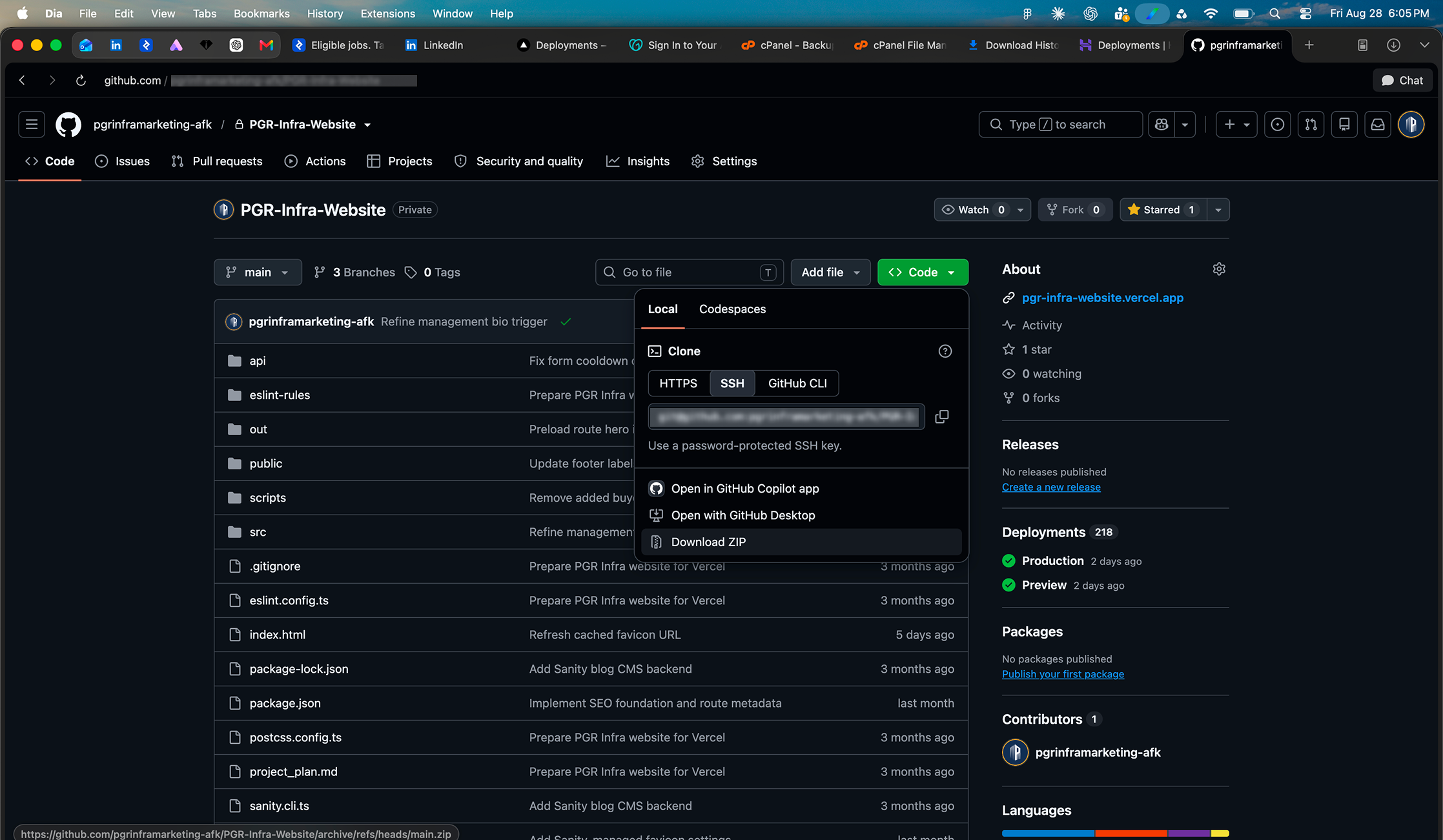
GitHub
The functional prototype moved into a versioned repository, giving the delivery work a reviewable source of truth from Readdy.ai through implementation.
The result is a responsive real-estate platform that gives visitors clearer answers and gives the PGR Infra team a durable foundation to evolve.
A consistent, accessible property journey across mobile, tablet, and desktop.
Sanity keeps project pages, editorial content, and updates current without a code release.
Answers stay grounded in approved content, with a clear handoff when a person is needed.
Structured content helps search and AI systems identify PGR Infra accurately and confidently.
Continue exploring
Browse more product design work across complex systems, emerging technology, and high-impact experiences.
I’m a Product Design Manager and Consultant open to complex products, strategic challenges, and high-impact collaborations. Whether you have a project, idea, or just want to say hello — I’d love to connect.
Built on real problems, not just pixels.
Connect directly to discuss UX, AI, product strategy, and what's next.
DM NowShoot me an email. I read every one, yes even the memes.
Follow or connect. Let’s turn conversations into collaboration.