Call-based access
No self-service route into support.
A mobile patient-support experience that brings treatment coordination, service access, and trusted guidance closer to people living with complex conditions—and the caregivers who support them.
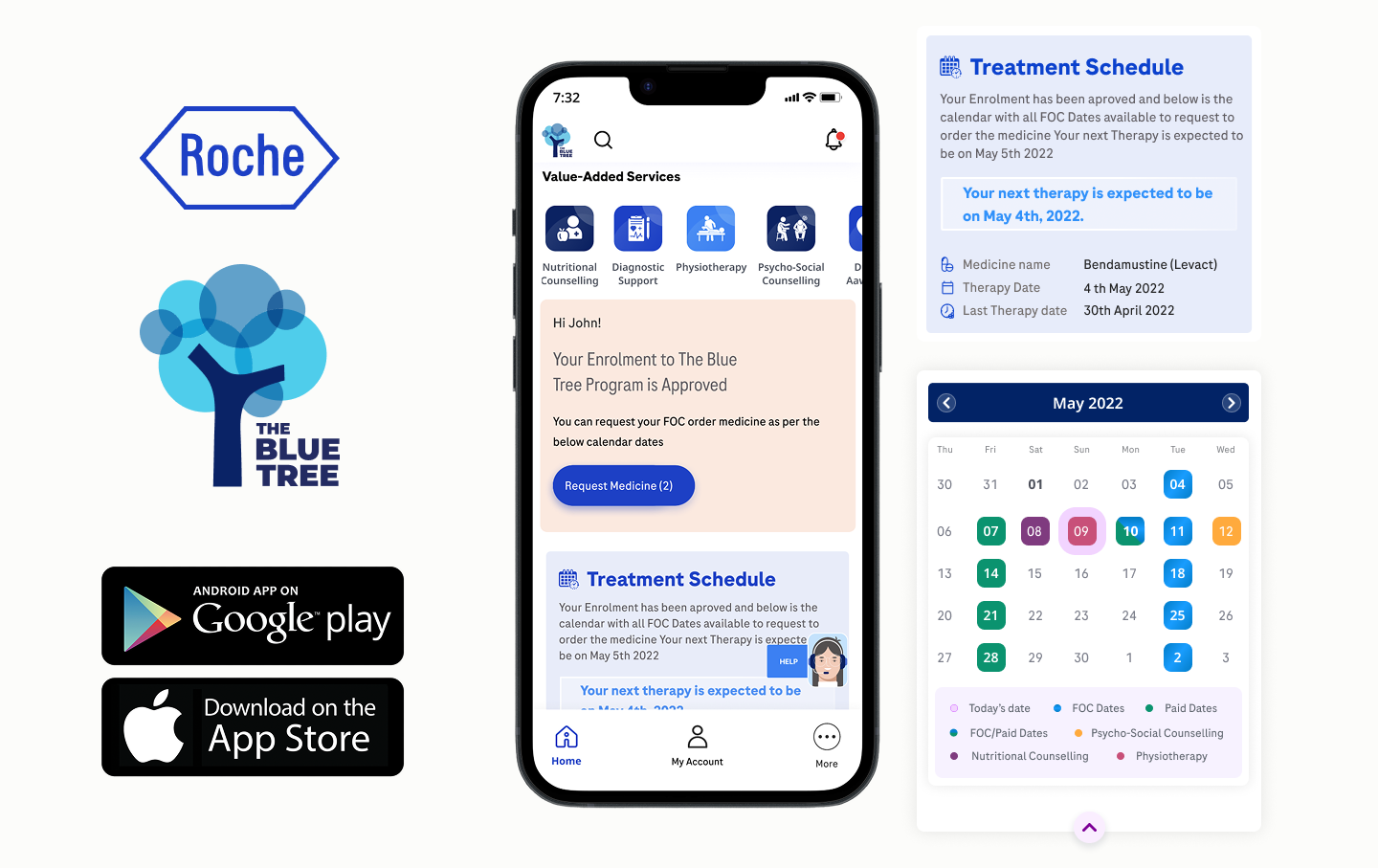
The challenge
Blue Tree lived in phone calls and clinic visits—leaving patients and caregivers without a simple way to see what happened next.
No self-service route into support.
Treatment and referrals stayed fragmented.
80% of programme interactions were caregiver-led.
Plain language, regional readiness, low-confidence friendly.
Discovery & research
Initial stakeholder discovery showed that Blue Tree had to coordinate far more than a patient app. The map brings the original profile research into one view: who each participant is, how they access care, and what they need the service to make possible.
Service ecosystem
The platform connects intake, clinical decisions, services, medicine fulfilment, and programme governance without asking a patient to translate between teams.
Intake & records
Capture prospect and patient information, then verify documents and applications.
Access control
Maintain user, partner, and programme records.
Programme insight
Pass programme and patient details to the DCS programme team.
Support services
Contact enrolled patients through approved service touchpoints.
Clinical referral
Advise patients about Blue Tree programme information.
Medicine logistics
Receive approved patient and delivery details from the programme.
Treatment journey
Understand the condition, programme, eligibility, and next care step.
Eligibility & consent
Generate leads and enrol eligible patients into the programme.
Care coordination
Guide patients through eKYC, consent, and document uploads.
How we mapped it
Patient and caregiver interviews · a four-week caregiver diary study · healthcare-provider focus groups · service-journey mapping · an accessibility review of existing Roche touchpoints.
Task flows & prioritisation
The stakeholder map became a working flow model: which task had to happen first, who owned the next hand-off, and what information had to stay intact to keep care moving.
01
Telecaller · Field counsellor · Patient
Turn a referral into a trusted programme record through eligibility, consent, document checks, and a clear next action.
02
Patient · Hospital · Doctor
Keep treatment timing, clinical guidance, and escalations visible without making a patient repeat their story.
03
Value-added service provider · Distribution partner · Patient
Connect approval, service requests, medicine logistics, and delivery status to one continuous care journey.
04
Roche team · Super admin / partner team · Service providers
Give programme teams the controls, reporting, and exception paths needed to keep every interaction accountable.
Research overview
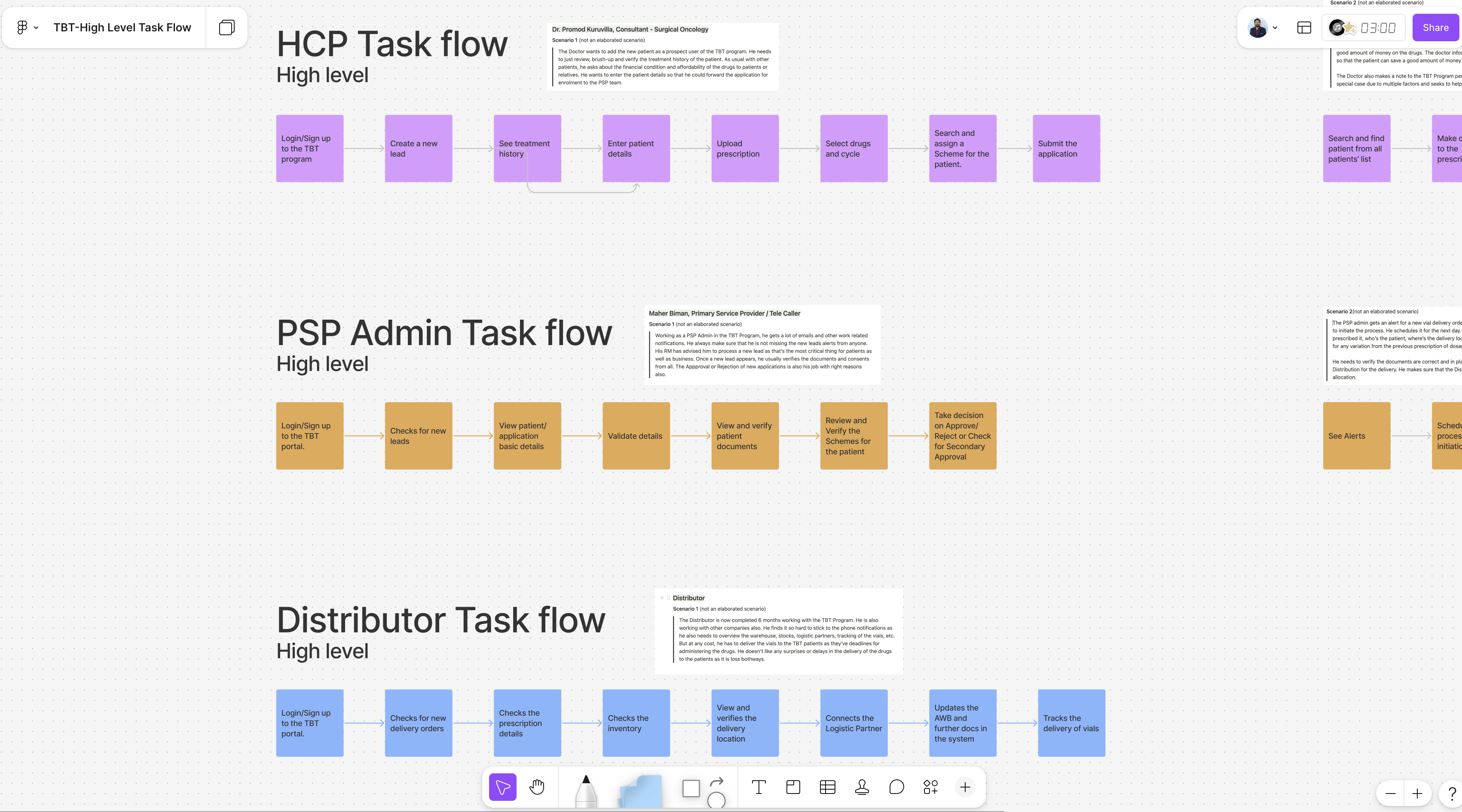
High-level flows
Three roles. One connected hand-off.
A concise view of the clinician, service-provider, and distribution journeys that shaped the service model.
Key decisions
The research did more than identify features. It clarified the product choices that would make a high-stakes care programme easier to enter, trust, and use in the real world.
One programme, radically different care contexts.
Condition-specific onboarding made the first session relevant to a person's disease vertical, instead of asking one generic home screen to serve every care journey.
Task success increased from 52% to 87% in comparative testing.
Sensitive health data can create hesitation.
A soft enrolment path let people browse support services first, then share information through progressive disclosure when they understood the value of the programme.
Legacy testing recorded a 63% reduction in early drop-off.
Care cannot pause when connectivity does.
Core care information was cached locally, while live requests and status changes synced when a connection returned—an intentional fit for Tier 2 and Tier 3 contexts.
78% monthly active retention was reported in low-connectivity regions.
Evolution of care
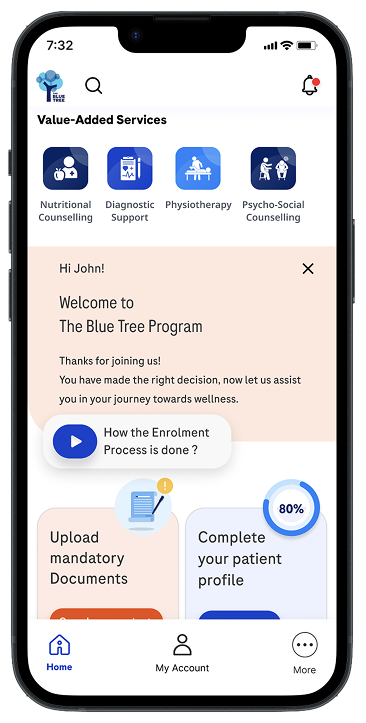
The home screen across two milestone builds—from the first functional hi-fi to the version that shipped after six months of testing, feedback, and hard design decisions.
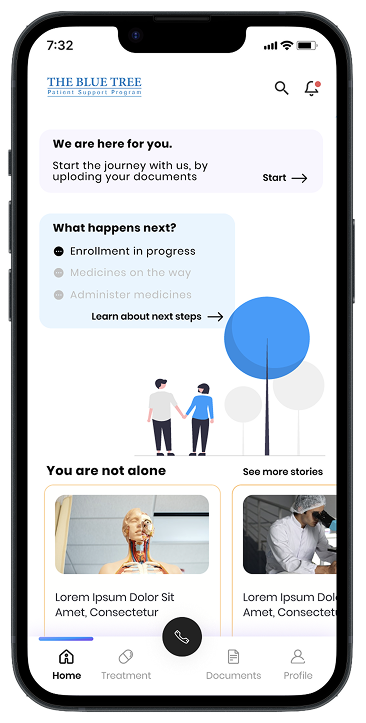
Early hi-fi
Shipped experience
What evolved
BeforeOne Start CTA hid the effort and data required, so 6 of 8 test users paused or abandoned the task.
ShippedA stepped path made the effort visible and collected details progressively—completion rose from 52% to 87% across rounds.
BeforeA linear list left people unsure whether they were blocked or waiting, creating avoidable support calls.
ShippedLive milestone cards and a progress ring made the current status clear; support-call volume fell 40% after launch.
BeforeValue-added services were three taps deep and missed by 70% of test users.
ShippedA visible home-screen service grid put every support route one tap away—with no navigation dead ends.
BeforeFour competing areas on one light screen gave people no clear first action.
ShippedA navy system established a deliberate reading order: welcome, action cards, then programme information—with WCAG AA contrast.
Screen deep dives
Two representative screens show how the final system turned support, schedules, and administration into clear next steps for patients and caregivers.
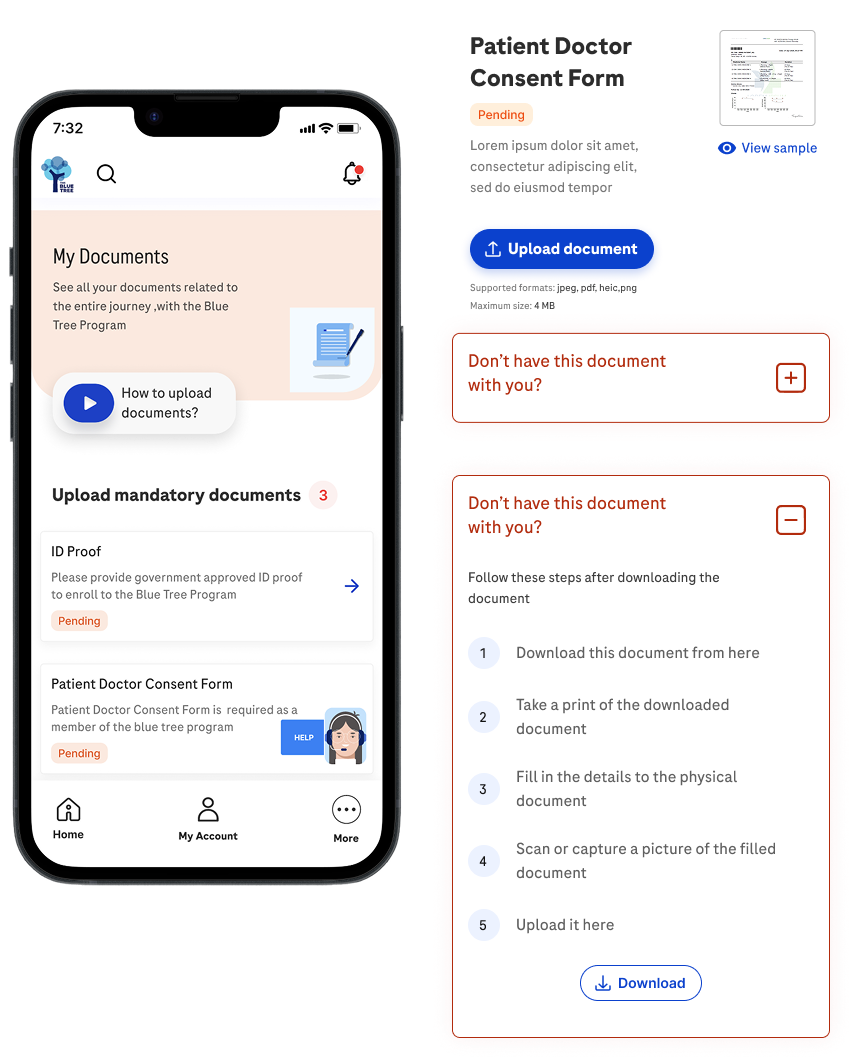
Document support
The experience turns a high-stakes upload into a clear, self-guided sequence instead of a reason to call support.
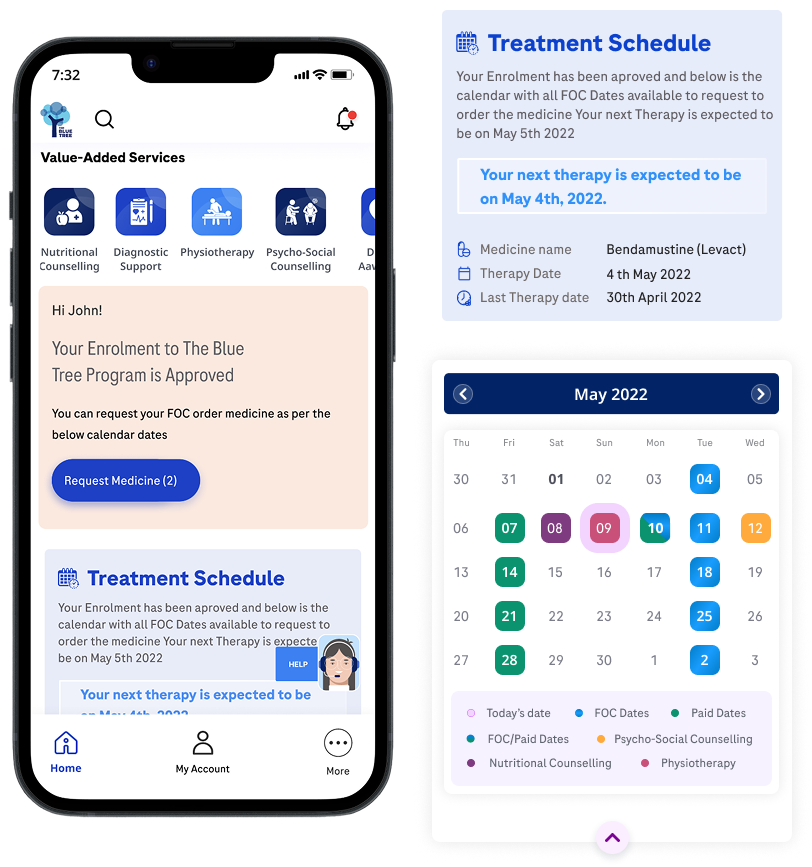
Treatment schedule
The home and calendar views surface practical support and treatment timing before anxiety turns into another call.
User role UX flows
Near Production walkthrough due to NDA limitations. The product is live on both the Google Play Store and Apple App Store.
Walkthrough overview
Doctor, hospital, distribution partner, field counsellor, and branch-assistant journeys shown as one connected operational service.
Design system overview
The Blue Tree interface was designed as an Atomic Design System: a practical language of foundations, reusable parts, and care-ready patterns that lets every role see a familiar, reliable experience.
System walkthrough
A walkthrough of the component system that turns shared care information into consistent, reusable screens.
Foundations → components → care flows
Colour, type, spacing, iconography
Input, status, and action combinations
Care cards, schedules, and service clusters
Repeatable role-aware screen structures
Consistent patient and partner flows
Impact & outcomes
The digital layer made a complex support ecosystem easier to enter, understand, and sustain at national scale—while keeping clinical, service, and delivery teams connected around the patient.
40,000+
Across India
5,000+
A wider referral ecosystem
4,000+
Support made visible
2025
Technology-enabled patient support
Programme recognition
2017
The Blue Tree Program was presented as an effective and unique patient-support programme during the 72nd UNGA session.
2024–25
Commended with Runner-Up for the Ranjit Shahani Memorial Award for Excellence in Patient Centricity at OPPI Annual Day.
2025
Recognised at the fourth Patient First Summit & Awards.
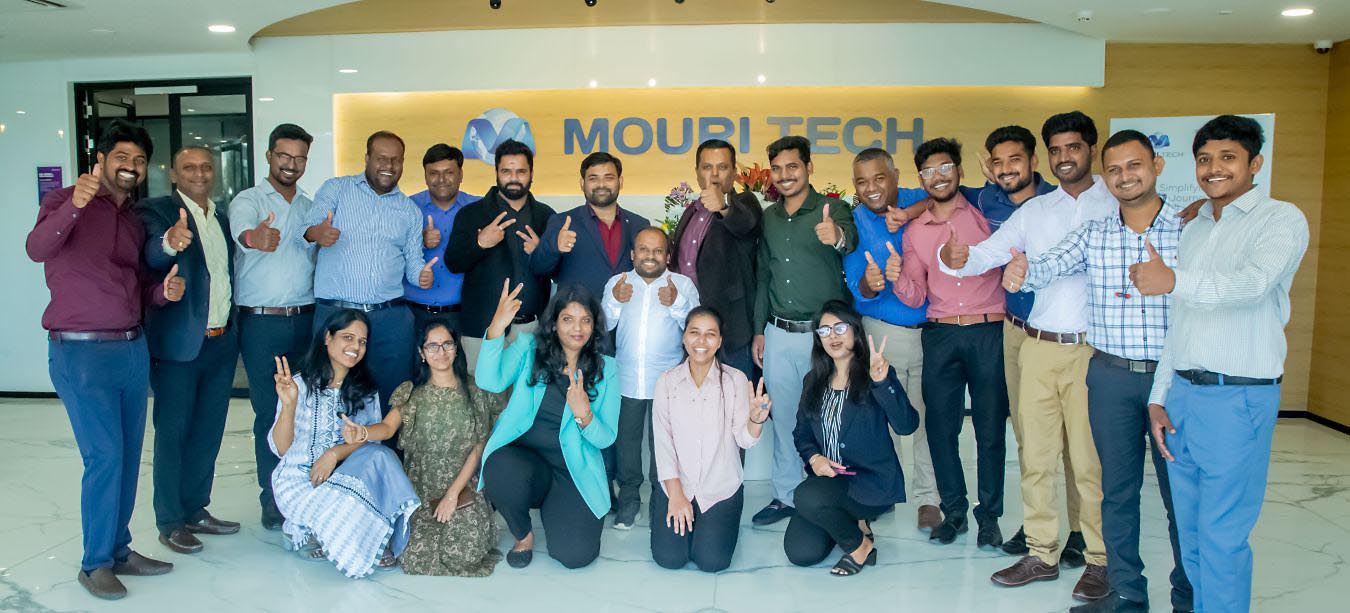
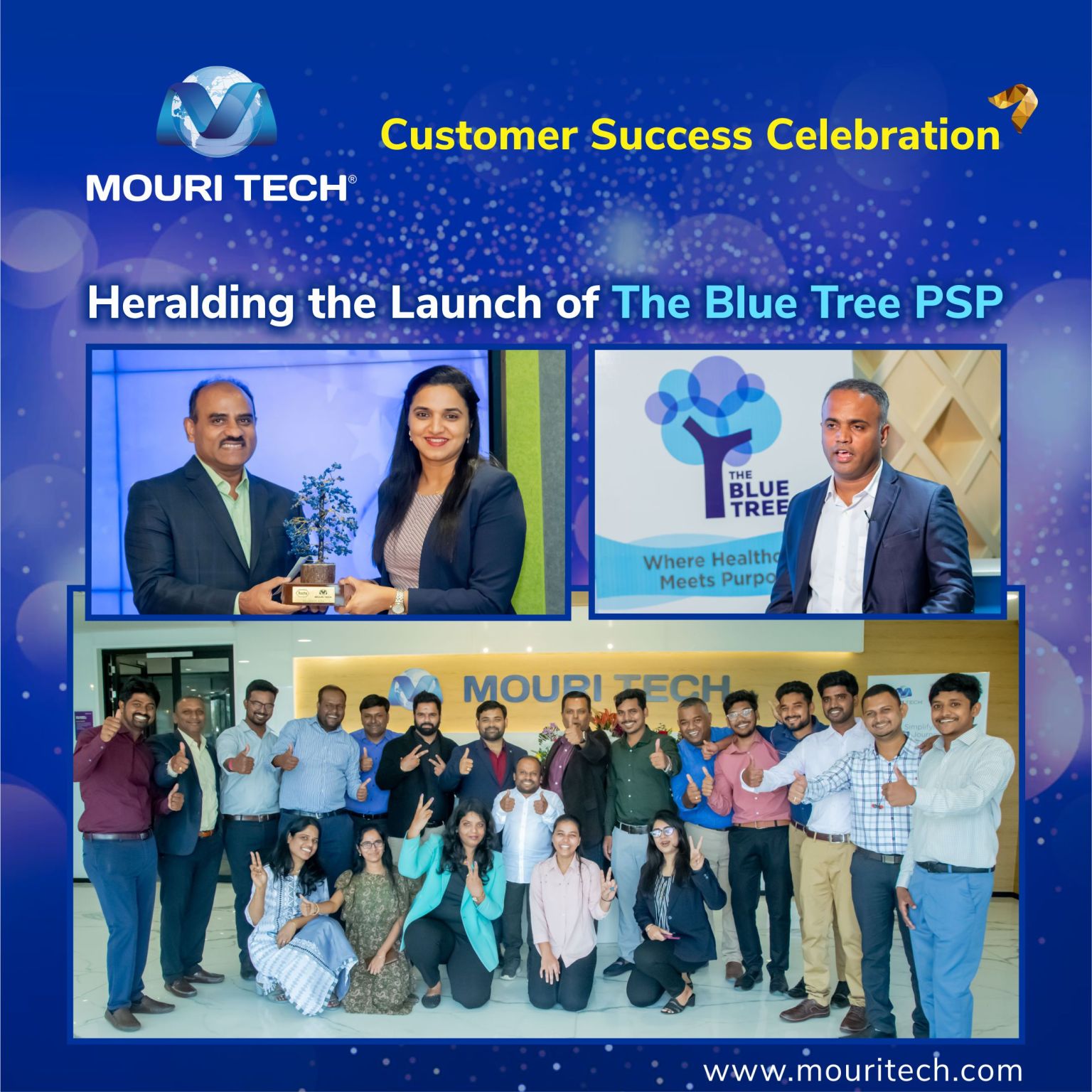
MOURI Tech Blue Tree programme team
Team & success
The experience came together with Roche patient advocacy and clinical SMEs, MOURI Tech, product, research, design, and engineering—aligning a high-trust programme with the realities of people receiving and coordinating care.
References & availability
These official Roche India pages document the Blue Tree Program, its scope, and patient-impact stories. They open in a new tab.
Measurement basis: Programme reach, doctor participation, diagnostic-test volume, and recognition are drawn from Roche India's published Blue Tree Program record.
Continue exploring
Browse more product design work across complex systems, emerging technology, and high-impact experiences.
I’m a Product Design Manager and Consultant open to complex products, strategic challenges, and high-impact collaborations. Whether you have a project, idea, or just want to say hello — I’d love to connect.
Built on real problems, not just pixels.
Connect directly to discuss UX, AI, product strategy, and what's next.
DM NowShoot me an email. I read every one, yes even the memes.
Follow or connect. Let’s turn conversations into collaboration.